Learn / Understanding Migraine
Understanding Migraine
What migraine really is
Migraine is a brain disorder of how sensory information is processed, not simply a bad headache.
5 min read · 4 research sources · Based on the Mastering Migraine courses by Dr. Adam Harcourt
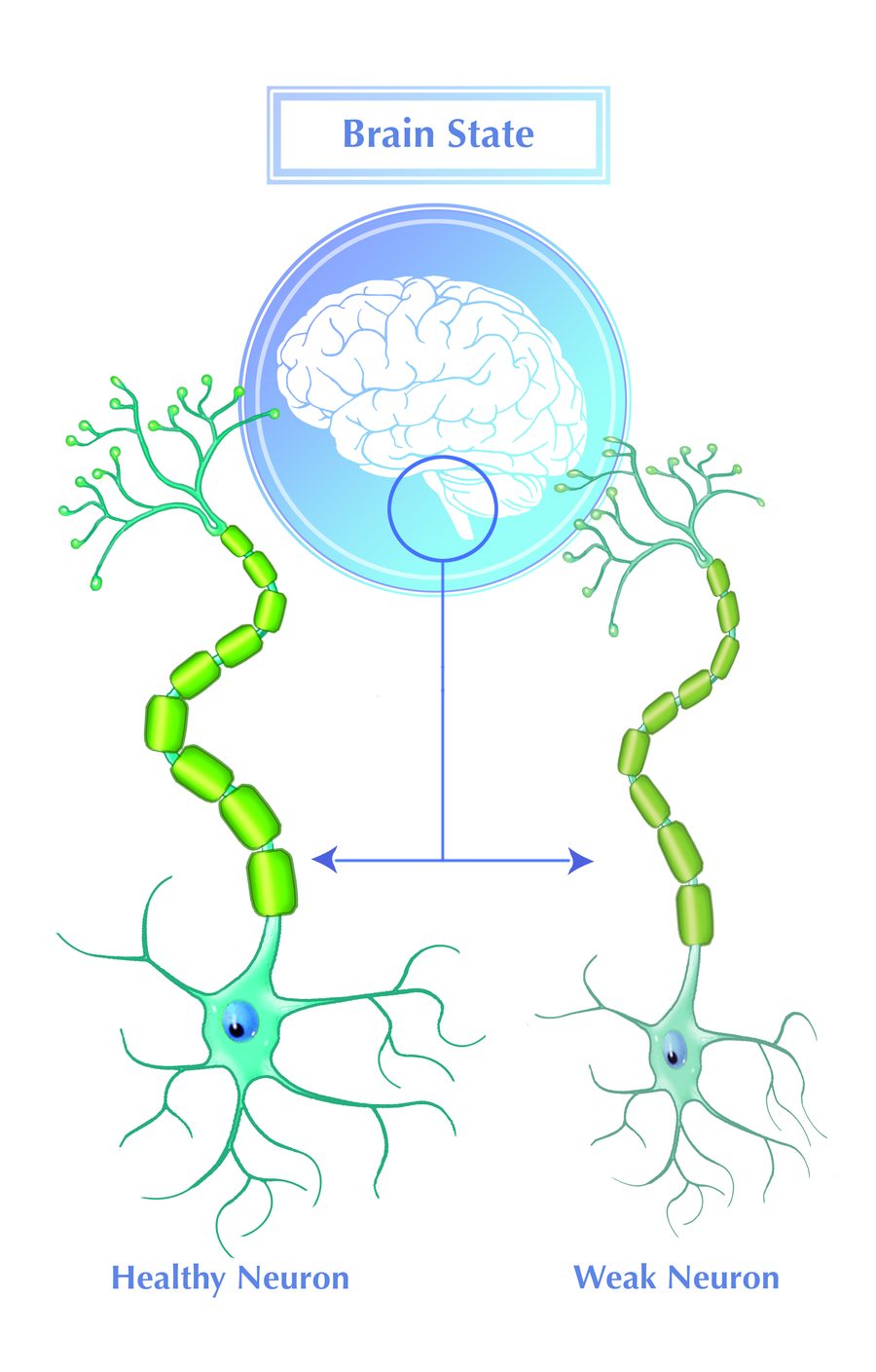
Many people grow up thinking of migraine as “a really bad headache.” The research Dr. Harcourt teaches from tells a very different story. Migraine is best understood as a disorder of the brain’s sensory processing: a migraine brain responds more strongly to light, sound, smell, movement and internal changes than other brains do, and that response can build into an attack 1.
More than head pain
A migraine attack can include nausea, sensitivity to light and sound, dizziness, brain fog, neck pain, fatigue, mood changes and visual or sensory “aura.” For some people the headache is the least disabling part. The international classification used by doctors worldwide defines migraine by this whole pattern of symptoms, not just by pain 2.
The old idea: blood vessels
For more than a century, migraine was blamed on blood vessels widening and narrowing in the head. Studies have since shown that the pain does not line up with changes in blood vessel size, and that substances which widen blood vessels only trigger migraine when they also act on nerve pathways 1. The focus has shifted to the brain and nervous system itself, including the brainstem, the hypothalamus (the brain’s control center for sleep, hunger and hormones) and the thalamus (a relay station for the senses) 3,4.
A brain that runs “hot”
One helpful way to picture migraine is a brain whose excitability rises and falls over days. At low points it is relatively protected. At high points, ordinary things like a missed meal, poor sleep or stress can be enough to tip it into an attack 1. This is why the same trigger does not cause a migraine every time, and why reducing your overall load matters so much. You can read more about this idea in Your migraine threshold.
Why this matters for treatment
If migraine were only a pain problem, painkillers would be enough. Because it is a whole-brain, whole-body condition, the Mastering Migraine approach looks at nutrition, hormones, the neck and muscles, and how the nervous system is functioning, alongside medical care. See The Mastering Migraine framework.
This article is educational and does not replace a personal evaluation. Talk with your clinician before making changes to medications, supplements or diet.
Research cited on this page
- Goadsby PJ, Holland PR, Martins-Oliveira M, et al. Pathophysiology of Migraine: A Disorder of Sensory Processing. Physiol Rev. 2017;97(2):553-622. PubMed 28179394 · DOI
- Headache Classification Committee of the International Headache Society. The International Classification of Headache Disorders, 3rd edition (ICHD-3). Cephalalgia. 2018;38(1):1-211. Source · DOI
- Noseda R, Kainz V, Borsook D, et al. Neurochemical pathways that converge on thalamic trigeminovascular neurons: potential substrate for modulation of migraine by sleep, food intake, stress and anxiety. PLoS One. 2014;9(8):e103929. PubMed 25090640 · DOI
- Aurora SK, Brin MF. Chronic Migraine: An Update on Physiology, Imaging, and the Mechanism of Action of Two Available Pharmacologic Therapies. Headache. 2017;57(1):109-125. PubMed 27910097 · DOI
Mastering Migraine is an educational resource and is not a substitute for individualized medical care. Always talk with your own doctor before changing medications, starting supplements, or beginning a new treatment.

