Learn / Understanding Migraine
Understanding Migraine
What happens in the brain during migraine
A plain-language tour of the trigeminal nerve, CGRP, the brainstem, the hypothalamus and sensitization.
6 min read · 7 research sources · Based on the Mastering Migraine courses by Dr. Adam Harcourt
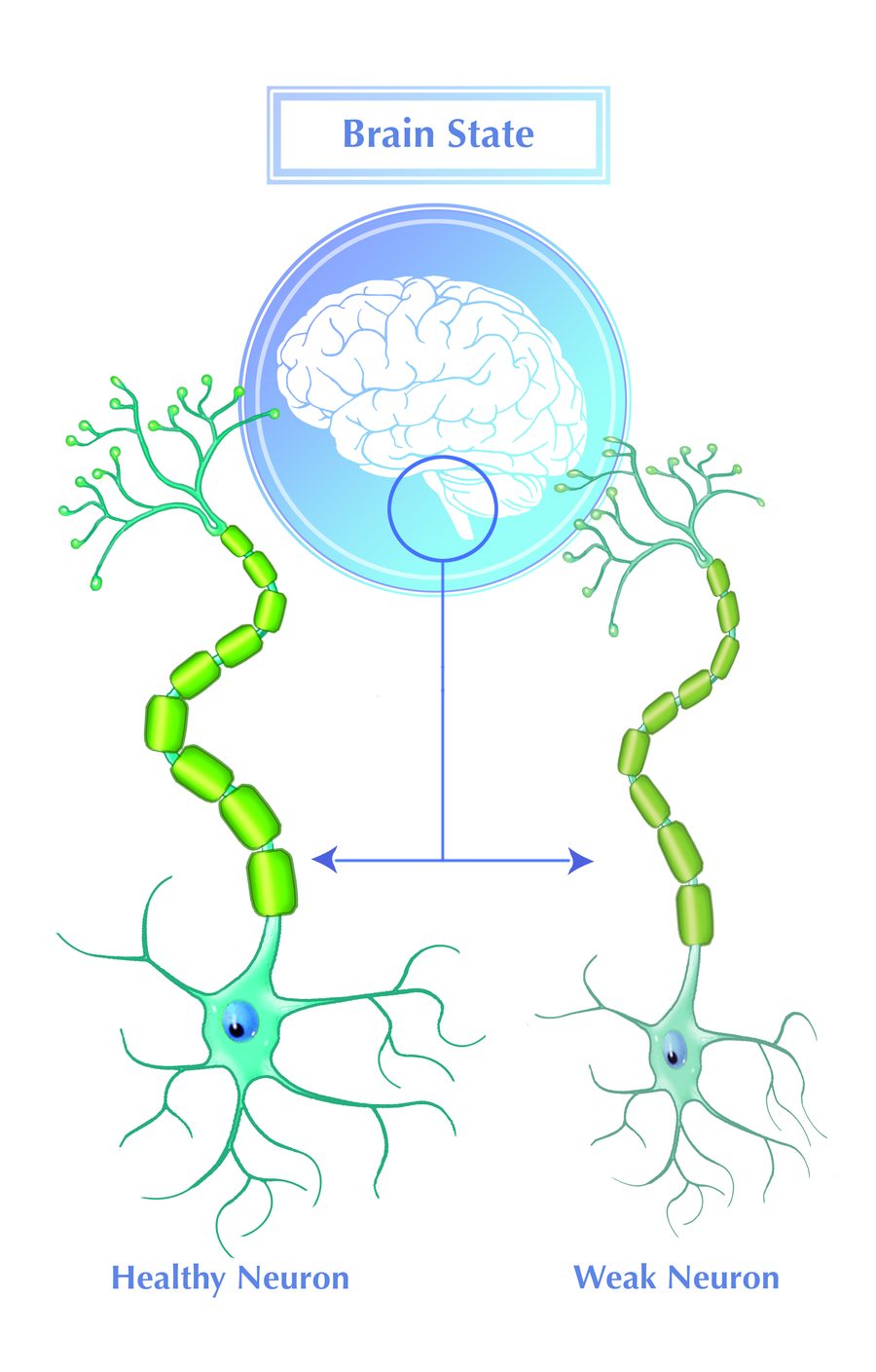
You do not need to be a neuroscientist to benefit from understanding your migraine. Here are the key players, simplified.
The trigeminal nerve: the pain highway
The trigeminal nerve carries sensation from the face, head and the coverings of the brain. In migraine, this system becomes activated and releases signaling molecules that sensitize pain pathways. Together with its connections to blood vessels, this is called the trigeminovascular system 1.
CGRP: a key messenger
Calcitonin gene-related peptide (CGRP) is one of the most important of those messengers. Levels rise during attacks, and giving CGRP can trigger migraine in people who have it 1. Several newer migraine medications block CGRP or its receptor 2,3.
The brainstem and hypothalamus: the control room
Areas deep in the brain that manage sleep, hunger, hormones, stress and pain switch on early in the attack, sometimes before any headache 1. This helps explain why sleep changes, missed meals, hormonal shifts and stress are so tightly linked to migraine.
The thalamus: why light hurts
The thalamus relays sensory information to the rest of the brain. Research shows that pathways from the eye’s light-sensing cells reach thalamic pain neurons, which helps explain why light can make migraine pain worse even in some people with vision loss 4.
Cortical spreading depression: the aura
A slow wave of nerve-cell activity followed by quieting spreads across the brain’s surface. It is thought to cause aura and may help activate the pain pathways 1,5.
Sensitization: when the system gets stuck “on”
With repeated attacks, the nervous system can become sensitized, lowering the threshold for pain. This shows up as tenderness of the scalp, neck and muscles, and is part of why migraine can become more frequent over time 1,6.
Inflammation and oxidative stress
People with chronic migraine can show higher levels of inflammatory markers 1. A large population study also found that people whose diet and lifestyle favored antioxidants were less likely to report severe headache or migraine 7. This connects the brain science directly to everyday choices.
This article is educational and does not replace a personal evaluation. Talk with your clinician before making changes to medications, supplements or diet.
Research cited on this page
- Goadsby PJ, Holland PR, Martins-Oliveira M, et al. Pathophysiology of Migraine: A Disorder of Sensory Processing. Physiol Rev. 2017;97(2):553-622. PubMed 28179394 · DOI
- Vikelis M, Spingos KC, Rapoport AM. A new era in headache treatment. Neurol Sci. 2018;39(Suppl 1):47-58. PubMed 29904827 · DOI
- Dodick DW, Lipton RB, Ailani J, et al. Ubrogepant for the Treatment of Migraine. N Engl J Med. 2019;381(23):2230-2241. PubMed 31800988 · DOI
- Noseda R, Kainz V, Borsook D, et al. Neurochemical pathways that converge on thalamic trigeminovascular neurons: potential substrate for modulation of migraine by sleep, food intake, stress and anxiety. PLoS One. 2014;9(8):e103929. PubMed 25090640 · DOI
- Aurora SK, Brin MF. Chronic Migraine: An Update on Physiology, Imaging, and the Mechanism of Action of Two Available Pharmacologic Therapies. Headache. 2017;57(1):109-125. PubMed 27910097 · DOI
- Florencio LL, Giantomassi MC, Carvalho GF, et al. Generalized Pressure Pain Hypersensitivity in the Cervical Muscles in Women with Migraine. Pain Med. 2015;16(8):1629-34. PubMed 25929269 · DOI
- Geng D, Liu H, Wang H, et al. Association between Oxidative Balance Score and Severe Headache or Migraine among American Adults A Cross-Section Study. Curr Neurovasc Res. 2024;21(2):139-147. PubMed 38323611 · DOI
Mastering Migraine is an educational resource and is not a substitute for individualized medical care. Always talk with your own doctor before changing medications, starting supplements, or beginning a new treatment.

