Learn / The Mastering Migraine Approach
The Mastering Migraine Approach
The Mastering Migraine Diet
Dr. Harcourt’s dietary guidelines: steady blood sugar, whole foods, and a structured approach to histamine and caffeine.
7 min read · 10 research sources · Based on the Mastering Migraine courses by Dr. Adam Harcourt
The Mastering Migraine Diet is built on research linking blood sugar, food sensitivities, caffeine and nutrient levels to migraine 1,2,3,4. Your clinician will tailor it to you, but these are the core guidelines.
1. Keep blood sugar steady
The most researched diet for migraine is the ketogenic diet, which is mostly protein and fat. Its benefit is thought to come largely from its low glycemic load 2. A low glycemic index diet has also reduced attacks in a trial 1.
- Eat every 2 to 3 hours.
- Keep starches to about 25% of your meal, with plenty of protein and fat.
- Think “logs, not twigs” (see Skipped meals and blood sugar).
- Get plenty of rest.
2. Foods to include
- Meats: from the most natural source possible, without antibiotics or hormones. Grass-fed, organic beef (liver is rich in B vitamins); wild-caught, smaller cold-water fish like salmon and trout; organic, free-range poultry. Local is best. Avoid processed meats.
- Vegetables: as many fresh, raw or steamed vegetables as possible, organic when you can. “Migraine superfoods” include spinach, Brussels sprouts, asparagus and avocado. Eat the rainbow.
- Fruits: organic and local when possible. Eat as a snack paired with a fat or protein.
- Fats: extra virgin cold-pressed olive oil, flax oil, avocado oil and coconut oil. Use coconut or grapeseed oil for cooking rather than olive oil. Nuts, unless you react to histamine. Eliminate hydrogenated fats like margarine.
- Carbohydrates: keep to a minimum, using only whole, gluten-free options such as brown rice, quinoa, millet, oats, sweet potatoes, yams, beans and legumes.
- Herbal teas: any naturally caffeine-free tea.
- Water: drink plenty throughout the day, but avoid large amounts during meals.
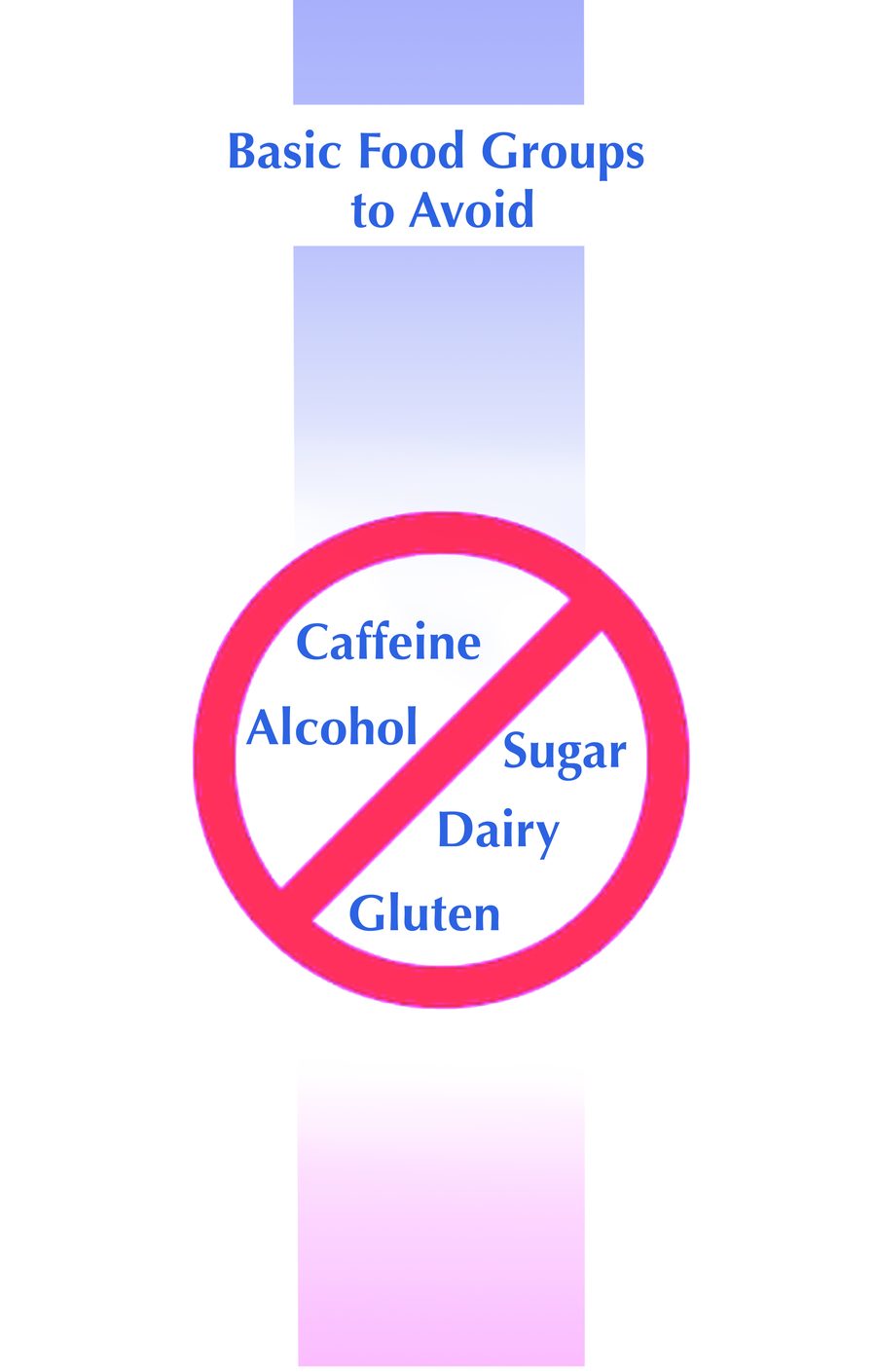
3. Foods to avoid
- Gluten (check labels: soy sauce and ketchup often contain it) 5
- Dairy: cow’s milk, cheese, yogurt
- Caffeine: coffee (even decaf), caffeinated tea, soda 6
- Alcohol: all forms
- Chocolate
- Citrus fruits
4. Caffeine: the Thursday rule
Caffeine withdrawal follows a bell curve, with days two and three usually the hardest. Have your last caffeinated drink on a Thursday so you can rest through withdrawal over the weekend. See Caffeine: friend and foe.
5. Histamine reduction (if needed)
If red wine tends to cause congestion, a stuffy nose, allergy symptoms or fatigue, you may have histamine intolerance 7,8. In the first stage of care, these foods are removed completely, then added back over time:
- Oily fish, processed (tuna, sardine, mackerel) or semi-processed (anchovy, herring); shellfish
- Cured meats (chorizo, salami and similar)
- Fermented foods (sauerkraut, soy products)
- Vanilla
- Fruits: citrus, kiwi, strawberry, pineapple, papaya, nuts and dried fruit
- Vegetables: spinach, tomato (fresh or sauce), eggplant
- Eggs
Some medicines can block the enzyme (DAO) that breaks down histamine. Do not change any medication without consulting your prescribing physician.
6. B vitamins
Deficiencies in B2, B6, B9 (folate) and B12 are associated with migraine 9,10. Foods rich in these include chickpeas, salmon, beef liver, trout, spinach, black-eyed peas and clams. If you do not eat these regularly, a B-complex supplement is a simple option, and a blood test can check your levels.
A note on personalization
Some people need food sensitivity testing or a more targeted plan. For example, salmon and trout are excluded if IgG testing is positive. Your clinician will adjust these guidelines to your results and response.
This article is educational and does not replace a personal evaluation. Talk with your clinician before making changes to medications, supplements or diet.
Research cited on this page
- Evcili G, Utku U, Öğün MN, et al. Early and long period follow-up results of low glycemic index diet for migraine prophylaxis. Agri. 2018;30(1):8-11. PubMed 29450870 · DOI
- Di Lorenzo C, Coppola G, Bracaglia M, et al. Cortical functional correlates of responsiveness to short-lasting preventive intervention with ketogenic diet in migraine: a multimodal evoked potentials study. J Headache Pain. 2016;17:58. PubMed 27245682 · DOI
- Hajjarzadeh S, Nikniaz Z, Shalilahmadi D, et al. Comparison of Diet Quality Between Women With Chronic and Episodic Migraine. Headache. 2019;59(8):1221-1228. PubMed 31453643 · DOI
- Gazerani P. A Bidirectional View of Migraine and Diet Relationship. Neuropsychiatr Dis Treat. 2021;17:435-451. PubMed 33603381 · DOI
- Kopishinskaya SV, Gustov AV. [Gluten migraine]. Zh Nevrol Psikhiatr Im S S Korsakova. 2015;115(8):13-17. PubMed 26356609 · DOI
- Lee MJ, Choi HA, Choi H, et al. Caffeine discontinuation improves acute migraine treatment: a prospective clinic-based study. J Headache Pain. 2016;17(1):71. PubMed 27492448 · DOI
- Smolinska S, Jutel M, Crameri R, et al. Histamine and gut mucosal immune regulation. Allergy. 2014;69(3):273-81. PubMed 24286351 · DOI
- De Marchis ML, Guadagni F, Silvestris E, et al. Genetic bases of the nutritional approach to migraine. Crit Rev Food Sci Nutr. 2019;59(14):2308-2320. PubMed 29517920 · DOI
- Menon S, Nasir B, Avgan N, et al. The effect of 1 mg folic acid supplementation on clinical outcomes in female migraine with aura patients. J Headache Pain. 2016;17(1):60. PubMed 27339806 · DOI
- Togha M, Razeghi Jahromi S, Ghorbani Z, et al. Serum Vitamin B12 and Methylmalonic Acid Status in Migraineurs: A Case-Control Study. Headache. 2019;59(9):1492-1503. PubMed 31471907 · DOI
Mastering Migraine is an educational resource and is not a substitute for individualized medical care. Always talk with your own doctor before changing medications, starting supplements, or beginning a new treatment.

