Common Stressors
Eyes, balance and dizziness
How the visual and vestibular (balance) systems can drive migraine and vertigo.
5 min read · 10 research sources · Based on the Mastering Migraine courses by Dr. Adam Harcourt
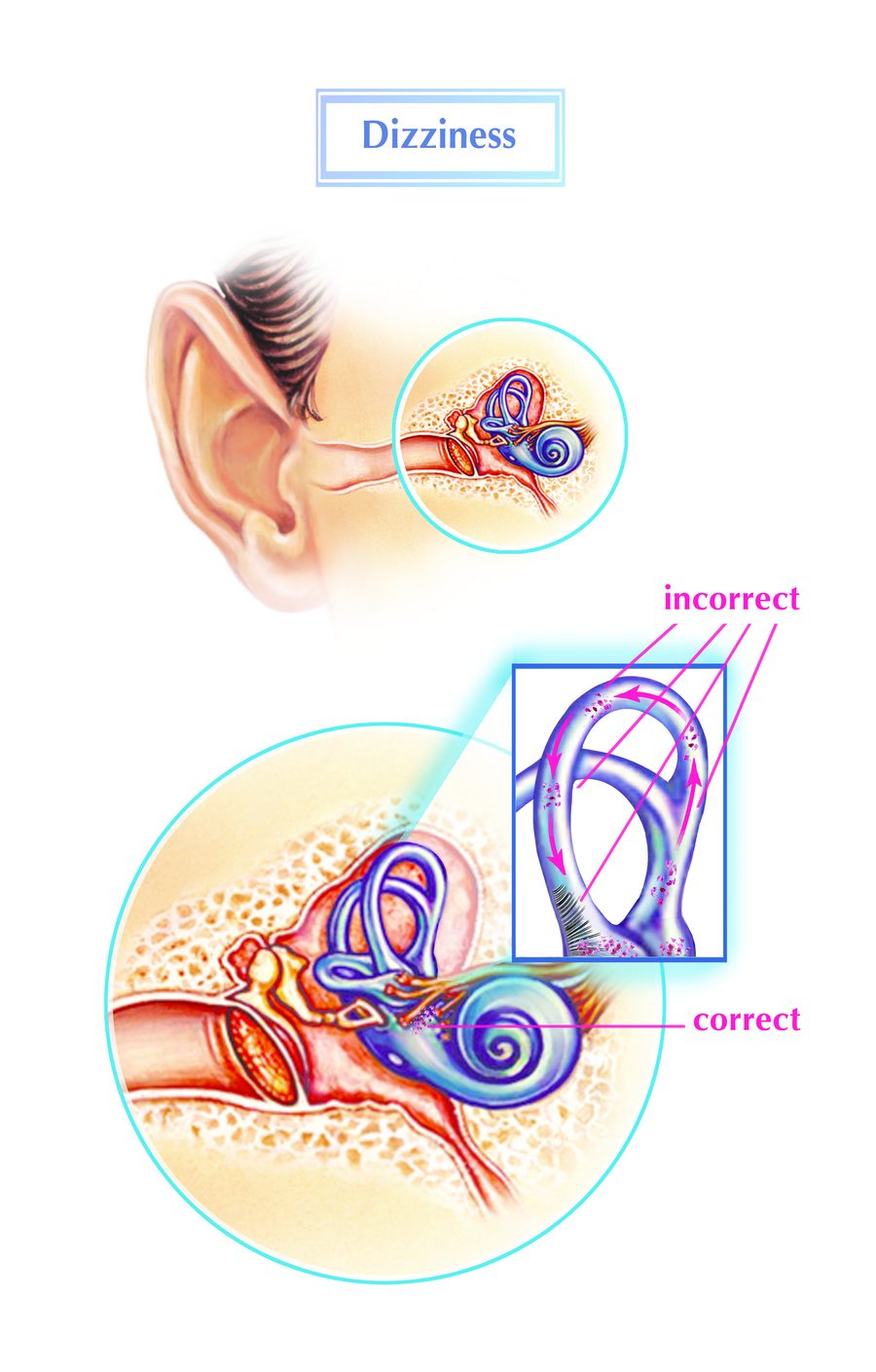
Your brain constantly combines information from your eyes, inner ears and body to keep you balanced and your vision steady. In migraine, this sensory integration can be off, and that strain can add to the bucket.
Eye movements in migraine
Research has found differences in how the eyes move in people with migraine, including saccades (quick jumps from one point to another) and smooth tracking 1,2,3. These differences can reflect how well the brainstem and cerebellum are processing information. Busy visual environments, scrolling and motion often feel overwhelming for people with migraine.
Motion sensitivity
People with migraine are more prone to motion sickness and visual motion discomfort, and testing with moving visual patterns can provoke symptoms 4.
Vestibular migraine
Vestibular migraine causes episodes of vertigo or dizziness lasting minutes to days, often with sensitivity to motion, light or sound, and sometimes with no headache at all 5. It is one of the most common causes of recurring vertigo, but is often misdiagnosed, and patients can suffer for years 6.
People with vestibular migraine often show abnormal visual-vestibular processing, which can lead to dizziness in busy environments like grocery stores 7. Dizziness-related disability is significant in people with migraine 8.
What helps
- A careful eye movement and balance exam (see Your first visit)
- Vestibular rehabilitation and eye movement therapy, which have shown benefits in research 9,10
This article is educational and does not replace a personal evaluation. Talk with your clinician before making changes to medications, supplements or diet.
Research cited on this page
- Chandna A, Chandrasekharan DP, Ramesh AV, et al. Altered interictal saccadic reaction time in migraine: a cross-sectional study. Cephalalgia. 2012;32(6):473-80. PubMed 22492423 · DOI
- Cambron M, Anseeuw S, Paemeleire K, et al. Saccade behaviour in migraine patients. Cephalalgia. 2011;31(9):1005-14. PubMed 21628442 · DOI
- Wilkinson F, Karanovic O, Ross EC, et al. Ocular motor measures in migraine with and without aura. Cephalalgia. 2006;26(6):660-71. PubMed 16686904 · DOI
- Granston A, Drummond PD. Painful stimulation of the temple during optokinetic stimulation triggers migraine-like attacks in migraine sufferers. Cephalalgia. 2005;25(3):219-24. PubMed 15689198 · DOI
- Beh SC, Masrour S, Smith SV, et al. The Spectrum of Vestibular Migraine: Clinical Features, Triggers, and Examination Findings. Headache. 2019;59(5):727-740. PubMed 30737783 · DOI
- Formeister EJ, Rizk HG, Kohn MA, et al. The Epidemiology of Vestibular Migraine: A Population-based Survey Study. Otol Neurotol. 2018;39(8):1037-1044. PubMed 30020261 · DOI
- Bednarczuk NF, Bonsu A, Ortega MC, et al. Abnormal visuo-vestibular interactions in vestibular migraine: a cross sectional study. Brain. 2019;142(3):606-616. PubMed 30759189 · DOI
- Lee SH, Kang Y, Sohn JH, et al. Dizziness Handicap and Its Contributing Factors in Patients With Migraine. Pain Pract. 2019;19(5):484-490. PubMed 30659725 · DOI
- Alghadir AH, Anwer S. Effects of Vestibular Rehabilitation in the Management of a Vestibular Migraine: A Review. Front Neurol. 2018;9:440. PubMed 29946294 · DOI
- Rodríguez-Almagro D, Barassi G, Bertollo M, et al. Manual Therapy Approach to the Extraocular Muscles in Migraine Treatment: A Preliminary Study. Adv Exp Med Biol. 2022;1375:29-37. PubMed 35147929 · DOI
Mastering Migraine is an educational resource and is not a substitute for individualized medical care. Always talk with your own doctor before changing medications, starting supplements, or beginning a new treatment.

